
Identify Who Owns a Mitchell County Property
Work from the property outward, not from a name. Mitchell County links its Parcel Search from the Appraiser, Clerk, and Treasurer pages, so that roll is the practical starting point when you have an address. Detail can vary from one parcel entry to another. Read what the result actually displays, write down the parcel identifier, and then confirm ownership against the latest instrument on file with the Register of Deeds. Two county records beat one label every time. That habit catches stale names, entity owners, and recent transfers before they mislead you.
- Enter the site address in the Mitchell County Parcel Search and record the parcel number and owner label.
- Check whether the mailing address differs from the situs, which is the physical property address.
- Ask the Mitchell County Register of Deeds for the latest deed tied to that parcel or legal description.
- Read the grantee on that instrument and note both the deed date and recording date.
- If the grantee is an entity, test its exact name in the Kansas business entity search.
This sequence answers the ownership question with two independent county records. The parcel roll gives you a current working label. The newest deed gives you the recorded transfer that stands behind it.
Read the Mitchell County Tax-Roll Owner Label
The Appraiser develops real-property values. It maintains the parcel system the county uses for routine owner and parcel research. An entry can pair an owner name with a tax-mailing address, situs, parcel number, legal description. It may also include value fields. Not every entry shows every field. Read each label literally. A mailing address tells you where notices go, not where the owner lives. A site address describes the land, not the taxpayer behind it. Treat the roll as a strong lead, and let the deed finish the story.
Owner of record is the name carried on the working county roll. Situs is the property location. Grantee is the person or entity receiving an interest in a deed. Title is the legal ownership interest. A portal label alone cannot establish it.
A missing field online is not proof that no record exists behind it. Online detail varies by parcel. Call the Appraiser, or go to the courthouse source, whenever the screen leaves the question open.
Compare Mitchell County Property Owner Sources
Each public source answers a narrower question than you might expect. Combining them avoids the common mistake of treating one owner label as the whole ownership record.
| Where ownership appears | What it contributes | Currency or limit |
|---|---|---|
| Parcel Search and assessment roll | Owner label, parcel key, and tax context when displayed | May lag a newly recorded transfer |
| Register of Deeds | Latest deed, grantee, legal description, and recording data | No official public online deed index was located |
| County GIS Experience | Visual link between land and parcel | Map geometry is not proof of title |
| Kansas business search | Entity status and resident-agent lead | Entity record does not prove the entity still owns the parcel |
Order matters. Start with the land, verify the instrument, and only then research any named entity. The official Mitchell County Parcel Search entry screen is the county source for that first property step.
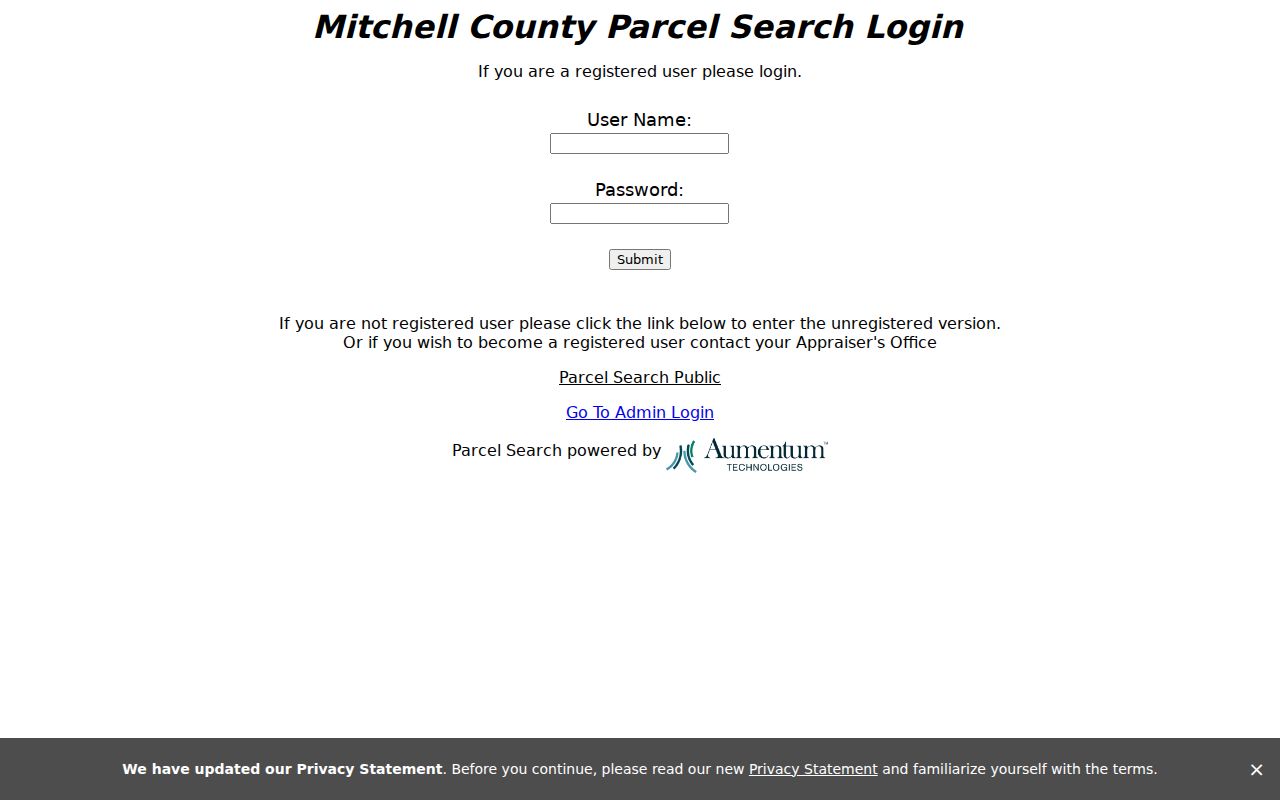
That entry screen marks the access point, and the deed check still confirms ownership.
Confirm a Mitchell County Property Owner at the Register
Deed records for Mitchell County live with the Mitchell County Register of Deeds, whose office sits at 111 S Hersey in Beloit. The recorder files deeds, mortgages, releases, liens, affidavits, plats, and surveys. The county publishes no online deed-index search, so the counter matters. So do phone requests at 785-738-3854, mail sent to PO Box 6, and written records requests.
Bring the owner of record, the parcel number, and the legal description with you. Ask for the most recent deed or index reference tied to the parcel, since staff will not judge title for you. The office notes its staff are not trained to perform title searches. Walk-in hours run 8:30 a.m. to 5:00 p.m. on weekdays.
Record check. A tax-roll name or GIS polygon is not a title determination. Confirm the newest recorded deed and seek qualified help for a legal conclusion.
Trace Mitchell County LLC, Trust, and Estate Names
An owner label may be an LLC, corporation, trust, or estate rather than a person. Search entities by their exact recorded spelling in the Kansas Secretary of State Business Entity Search. The service accepts a business name, a Kansas business ID, or a current resident-agent name. Name results are capped at the first 200. Its business ID is not a federal employer number. A resident agent is a contact for the entity. That is not proof the agent personally owns the land. Trust and estate labels often require the deed itself, an affidavit, or a probate order. Kansas CaseSearch offers public district-court case information. Courthouse terminals can show public material unavailable online. Match every lead back to the legal description. Only then decide two similar names share one property interest.
Account for Mitchell County Recording and Roll Lag
"Current" depends on which record you mean. The appraisal cycle uses January 1 as its valuation date. An assessment record has a defined administrative frame. A sale can close later. The owner label may lag until the deed reaches the Register. The county publishes no fixed Mitchell County update interval. Avoid promising a number of days. Keep the signed deed or contract date separate from the recording date. The county's forms page adds a local rule. Documents arriving after 3:30 p.m. on the last business day of January through November record the next business day. December uses a 10:00 a.m. cutoff instead. That one-business-day gap can appear without changing who the instrument names. It explains timing, not ownership.
Note: Record the portal access date and the deed recording date. A later reader can tell which source was newer.
Use Mitchell County Owner Records with Care
Kansas public-record access comes with limits. The Kansas Open Records Act allows inspection and copies, subject to exemptions, request procedures, and reasonable fees. K.S.A. 45-230 restricts certain uses of lists of names drawn from public records. Kansas Safe at Home also gives qualifying victims a substitute address and mail forwarding under K.S.A. 75-451 through 75-458.
These rules keep property research honest. An owner record fits a purchase inquiry, an easement question, an estate matter, or another legitimate property purpose. Don't infer occupancy from a mailing address. Never republish personal details without need. And never use the information to harass, stalk, or harm anyone.
Know What a Mitchell County Ownership Lookup Leaves Open
A lookup tells you plenty. It can identify the name carried on the roll, tie a parcel to its mapped shape, and locate the latest recorded grantee. Some questions stay open, though. An unrecorded claim, a deed defect, competing interests, or a disputed boundary will not resolve itself from a name alone. Nor can a court order's legal effect. Trusts and entities hide people too. It won't name every trust beneficiary or entity affiliate.
For the current roll in detail, use the Mitchell County current-owner guide. Older transfers take a different tool. The former-property-owners guide keeps the inquiry inside the deed chain. A purchaser who wants assurance beyond public indexing should order proper title work. Treat the method as a starting point.
A business grantee adds a step. The Kansas Secretary of State Business Entity Search can clarify the entity name, business ID, status, and resident-agent record. That search resolves names only. It does not prove the company still owns the parcel. Match the entity to the deed's exact name and legal description. If the trail runs through an estate, Kansas CaseSearch and the courthouse terminal may reveal a probate or other order, but the recorded instrument still controls the land conclusion.
Keep a short evidence log for each check. Record the address used, the parcel or tax ID, the situs versus mailing distinction, the tax year, the source date, the latest deed reference, and any conflict left open. Dates matter here. A January 1 assessment snapshot can lag a deed recorded later, and Mitchell County's month-end recording cutoff can push an instrument into the next business day's record. Reporting those dates beats declaring one undated web name final, and it gives the Appraiser or Register enough detail to confirm the right tract. If either office cannot locate the record, ask which spelling, date, parcel key, or legal-description field would narrow the ownership request.